The 5 Best Things for a Pelvic Floor Nobody Ever Explained to You
You were told to do your Kegels and nothing else. No way to tell whether you are doing them right, and no reason to keep going. Five things our editors recommend, starting with the one that makes the rest worth doing.

Almost every woman over fifty has been handed the same instruction, usually in a hurry and usually by somebody already reaching for the door: do your Kegels. Nobody says which muscles, or how many, or how hard, or for how long, or how you would ever know it was working. So most of us do them conscientiously for about nine days, feel nothing whatsoever, and quietly stop.
The pelvic floor is a hammock of muscle slung between the pubic bone and the tailbone, holding up the bladder, the bowel and the uterus. It is ordinary skeletal muscle, like a bicep. It can be weak. It can also be too tight — and, unhelpfully, the two feel much the same from the inside, which is why “squeeze harder” is sometimes exactly the wrong advice. The five things below cover the whole job: understanding what you are working with, doing the work, doing the opposite when the opposite is what you need, taking the daily strain off, and one that exists to make you keep going at all. We have put that last one first, and the reason is in the paragraph under the heading.
1. The one that makes the rest worth doing
This is an unusual way to open a pelvic floor article, so here is the reasoning in full. The pelvic floor is the muscle group that contracts rhythmically and involuntarily during orgasm, and arousal is what draws blood into the whole region. That is plain physiology, and it is the half of the subject that essentially never gets written about, because pelvic floor coverage is all leaking and no sensation.
The second reason is the honest one. Pelvic floor exercises do not fail because they do not work. They fail because nobody keeps doing them, and the surest way to stop a woman thinking about her pelvic floor is to file it under chores alongside flossing. Something that returns the region to the pleasure column is the likeliest thing to keep your attention on it for longer than a fortnight. What it will not do is strengthen anything. The ring and the balls further down are where the actual work happens.


Aura Intimate Massager
25% offYou save $44.99
- Four sensations in one: gentle warmth, orbital massage, air pulses and vibration
- More than twenty programs, and quiet enough to stay entirely your own business
- Soft body-safe silicone, a giftable box and a one-year guarantee
“Every other thing on this list is homework. This is the reason to keep doing the homework, and it is the one pick here nobody has to be talked into using.”
The pelvic floor is the muscle group that contracts rhythmically during orgasm, and arousal is what brings blood into the whole area — which makes pleasure the one part of pelvic health that is never written about, because the coverage is all leaking and no sensation. It leads here for a plainer reason too. Pelvic floor exercises do not fail because they do not work; they fail because almost nobody keeps doing them, and a region filed under chores stays filed under chores. What this will not do is strengthen anything, and we are not going to pretend otherwise: the ring and the balls further down do that work. It is 25% off as we publish, at $135 against its usual $179.99.
2. The explanation nobody gave you
Every other recommendation here assumes you know what you are training and why. Almost nobody does, because the entire subject is dispensed in ten-second instructions at the end of appointments about something else. This is the long version, written by somebody who does it for a living, and it is where we would start.

Floored: A Woman’s Guide to Pelvic Floor Health at Every Age and Stage
- Written by a practicing pelvic floor physical therapist, not by a wellness brand
- Covers the whole arc: postpartum, perimenopause, menopause and the years after
- Hardcover $30; also in paperback at $21.99 and as an audiobook
“Thirty dollars to be told, finally and in order, how a part of your own body works. Expect to finish it slightly annoyed — not at the book, at how long it took for somebody to explain this.”
Almost no woman knows what her pelvic floor is actually for, because the subject is handed out in ten-second instructions between other appointments. Reardon is a pelvic floor physical therapist who built a following explaining this properly, and the book is the long version: what the muscles do, what changes at each stage of life, which symptoms are normal and which are a reason to ring someone. It is also the cheapest way to work out whether you need pick three or pick four, which answer opposite problems that feel much the same from the inside.
3. The exercise, with something to push against
The trouble with a Kegel is that it is invisible. You cannot see the muscle, it gives you almost no sensation back, and studies of women taught the exercise by verbal instruction alone have repeatedly found that a substantial minority get it wrong — some by bearing down rather than lifting, which is the opposite movement. Anything that turns the exercise into something you can feel and repeat is worth having, and the simplest version of that costs thirty-five dollars.
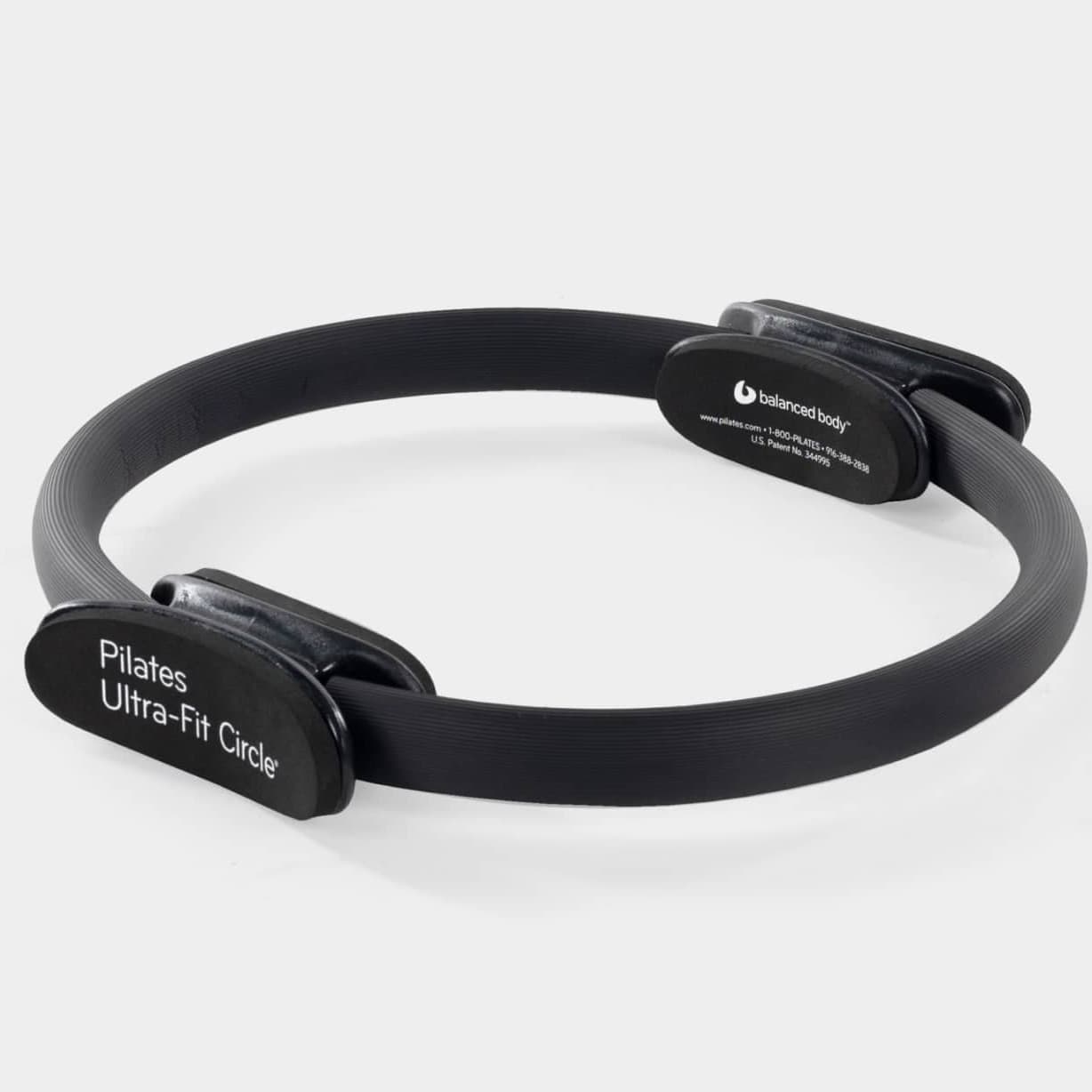
Pilates Ultra-Fit Circle
- A 15-inch ring with padded handles inside and out, comfortable between the knees or the palms
- Moderate resistance, roughly that of a three-band steel spring circle
- From Balanced Body, which has made studio Pilates equipment for decades
“A squeeze you cannot see is easy to abandon. A ring between your knees during a bridge is a routine, and a routine is what gets done.”
The pelvic floor rarely works alone: it switches on together with the deep abdominal muscles, and physical therapists and Pilates teachers often pair a pelvic floor lift with a gentle squeeze of the knees towards each other. A ring gives that squeeze something to push against and gives the whole thing a shape — a bridge with the ring held between the knees, a seated squeeze while the kettle boils — so the exercise stops being an abstract clench you are never sure you are doing. At $35 it is the least intimidating way to start.
A pelvic floor can be too tight as easily as too weak. Squeezing a tight one is the commonest mistake in the whole field.
4. The one that assumes the opposite
And now the sentence that should have been said to you years ago: a great many pelvic floors are not weak, they are tight. Held, guarding, never fully letting go — and producing almost exactly the symptoms of a weak one. Urgency. A dull ache. Discomfort during sex. For those, more squeezing makes everything worse, and learning to release is the treatment instead.
Which of the two you have is not a thing to diagnose from an article. It is the first question a pelvic floor physical therapist answers, usually inside a single appointment, and it is the appointment we would make before buying anything on this page.
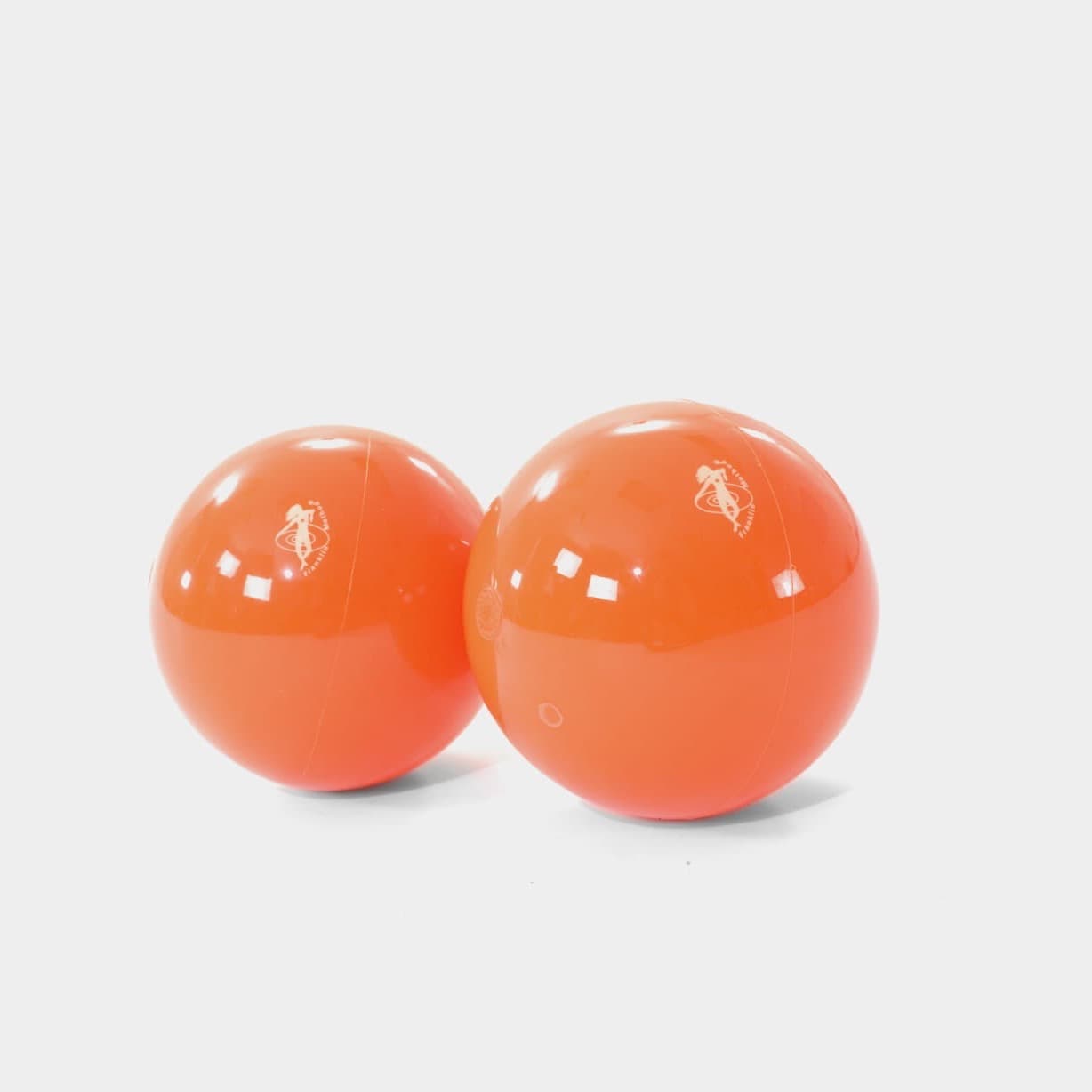
Franklin Smooth Ball Set
- A pair of soft 4-inch balls, developed by movement teacher Eric Franklin for his own classes
- Sit on them, one under each sitting bone, and a held pelvic floor has something to let go against
- Ships semi-inflated; the needle pump to firm them up is sold separately
“Plenty of women who are told to do more Kegels should be doing fewer. Nobody says so, and it is the most useful sentence in this article.”
Everything else here assumes a weak pelvic floor. A great many are not weak — they are tight, held and guarding, and a tight floor produces very nearly the same symptoms as a weak one: urgency, aching, discomfort during sex. Squeezing a tight muscle harder makes all of it worse. What it needs is to learn to let go, and sitting on a pair of soft balls, one under each sitting bone, breathing slowly, is about the gentlest way in. Eric Franklin built a whole method around exercises like this and wrote a book on the pelvic floor specifically. Which of the two problems you have is not something to guess at from an article; it is usually settled in one appointment.
5. The least glamorous thing on the list
Every magazine piece on this subject skips the bathroom, and the bathroom is where a great deal of the damage is done. Years of straining load exactly the muscles you are trying to protect, and the fix is not a program or a gadget. It is the angle you sit at.
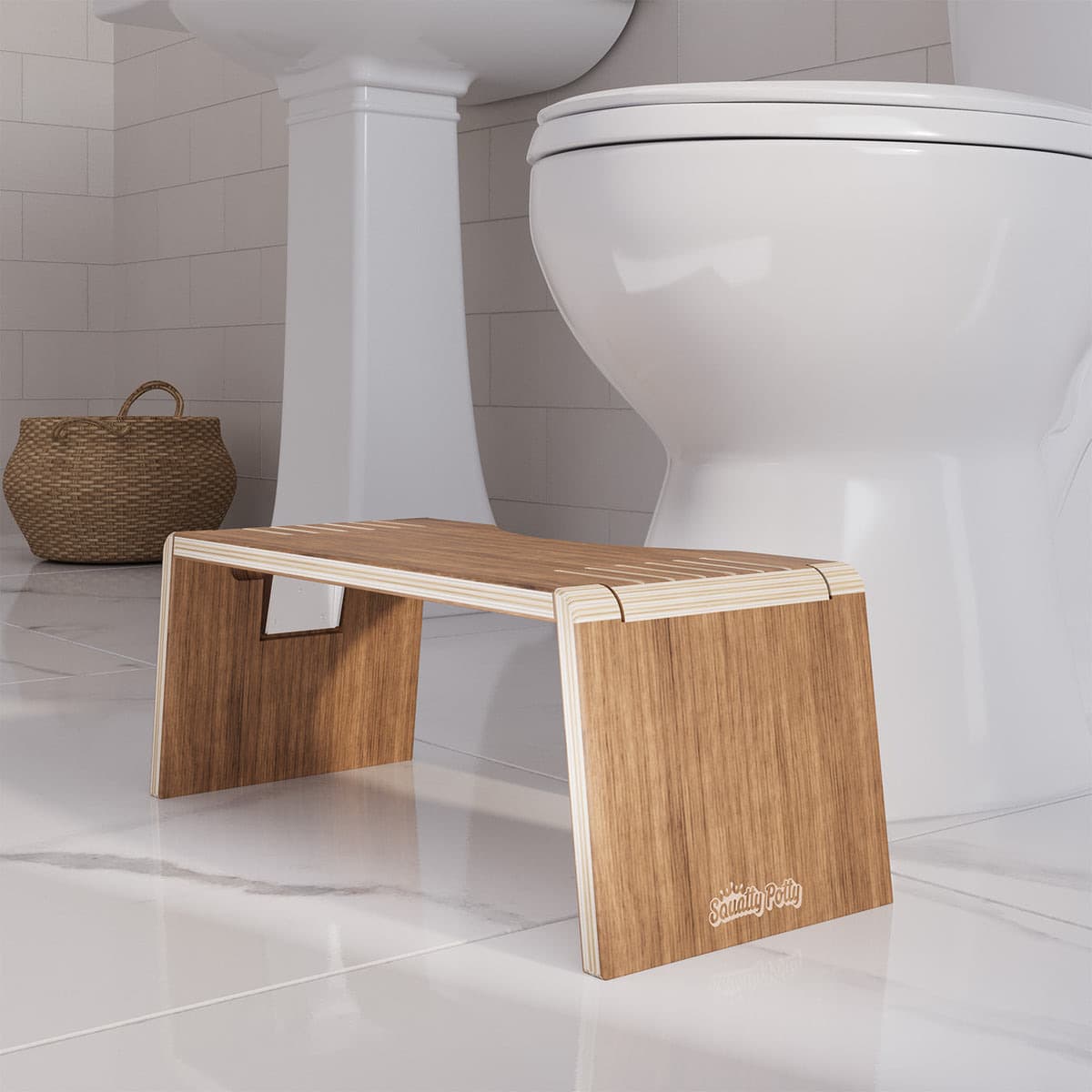
Oslo Teak Folding Stool
- A 7-inch folding stool in teak that raises your knees above your hips
- Folds flat to slide beside the toilet, and is handsome enough not to need hiding
- Arrives ready to use, with nothing to assemble
“A magazine recommending a toilet stool is faintly undignified. So is straining, and only one of the two is doing you any harm.”
Straining on the toilet bears down on the pelvic floor, day after day, which is precisely the load you are trying to take off it. Raising the knees above the hips changes the angle the body has to work against, which is why a footstool is among the first and cheapest things pelvic floor physical therapists suggest. Squatty Potty made the idea famous with a plastic step; this is the version from their range we would actually leave out in a nice bathroom.
How we chose
We started from what our editors have used, from the guidance pelvic floor physical therapists publish for their own patients, and from what the women around us said they had actually kept using after a month. We cut anything that needed a trend to justify it, anything sold on shame, and anything from a brand that will not stand behind it with a real returns policy.
We left insertable trainers and weights off this list on purpose. They have their place, but they are best chosen with a physical therapist, who can first tell you whether you need to strengthen at all — and for a pelvic floor that is already tight, they are the wrong tool entirely.
We cut the vaginal “rejuvenation” lasers, which are marketed hard to women in exactly this age group and which the US Food and Drug Administration issued a public safety warning about in 2018. And we cut the jade eggs, whose best-known seller paid $145,000 in civil penalties in 2018 over claims that they improved bladder control and prevented prolapse — which are precisely the claims that would put them in an article like this one.
One thing nothing on this page can do. If you are leaking, in pain, or feel a heaviness or a bulge, that is a medical question with a well-established answer: pelvic floor muscle training supervised by a pelvic floor physical therapist is first-line treatment in every major guideline we could find, it is frequently covered by insurance, and it beats anything you can buy. Nothing here is a treatment, and pick one least of all.
Prices are what each retailer charged on the day of publication and are recorded on each product. One was on promotion when we checked: Mila’s Aura at $135 against $179.99, a 25% reduction that holds all the way to the basket. The Franklin balls ship semi-inflated and need a needle pump, which is sold separately. Availability changes; if you find something that has, tell us and we will correct it.